A toy manufacturer China factory owns tooling, injection machines and a QC line; a trading company aggregates other people's catalogs; a sourcing desk manages your order across multiple factories. Buyers get burned when they assume the entity that answered their email is the entity that will mould the plastic — so the decision rule is simple: confirm the role in writing first, then pull SKU-level evidence before you pay a deposit.
Chenghai is the densest toy-supply ecosystem in the world, but density is not ownership. A five-person registered shop in Chenghai can legitimately quote a product made by a factory it does not own. That is not fraud; it is a different role. Your job is to know which one you are buying from.
Key Takeaways
- Chenghai (Shantou, Guangdong) is a cluster, not a single supplier — a registered entity there may be a manufacturer, a trading house, or a sourcing desk, and the same product can be quoted by all three with different liability.
- Registered-directory facts and self-descriptions are different evidence classes. A Chenghai listing showing a sole proprietorship, small-scale taxpayer status and a five-person headcount tells you scale and legal form — not production capacity, certification, or export rights.
- Certificates are product- and lot-specific. A Children's Product Certificate (CPC) must identify the domestic manufacturer or importer certifying compliance and cite each applicable CPSC rule — a trading company is not automatically that certifying party.
- A sealed golden sample and a revision card settle disputes; a photo or a Canton Fair booth unit does not. Bulk is compared to the physical piece on the QC shelf for colour, fit, flash and function.
- Tooling ownership is a document, not a handshake. Fee, ownership, storage period and what happens if the tool sits idle must be written into the contract before the first payment.
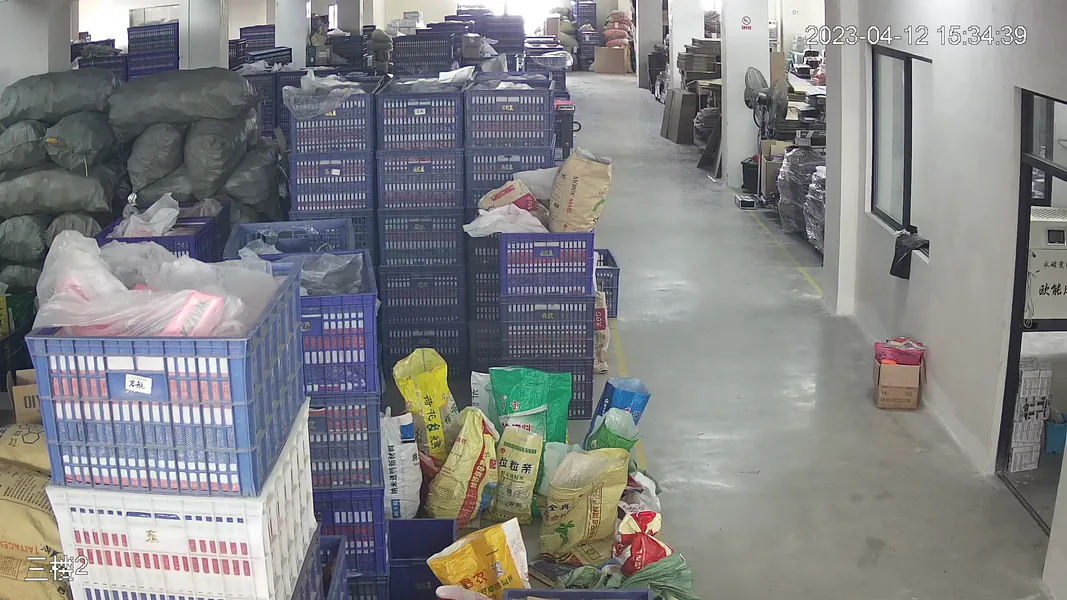
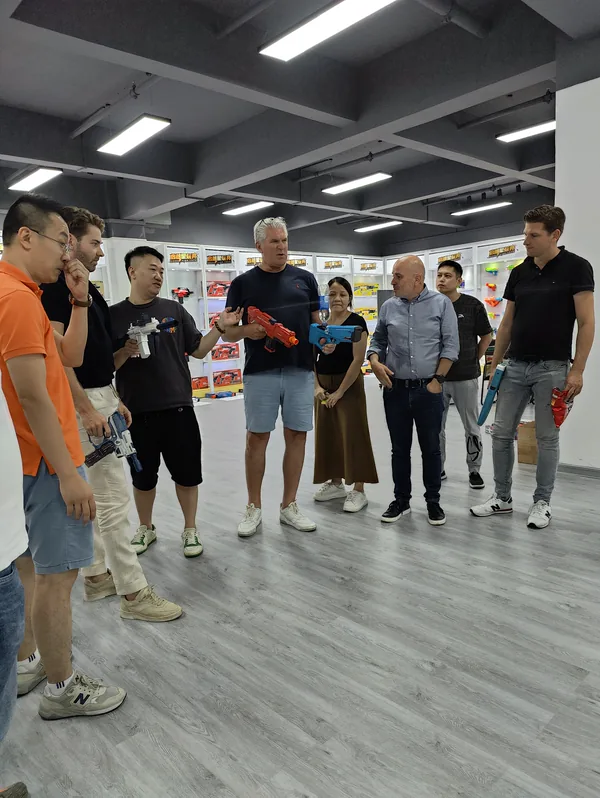
What is the difference between a toy manufacturer, a trading company and a sourcing desk?
A manufacturer owns or controls production assets — moulds, injection machines, assembly, QC. A trading company buys finished goods from factories and resells them, usually adding export paperwork and sometimes packaging. A sourcing desk does not hold stock; it runs your project across several factories, following samples, QC and shipping on your behalf.
The distinction matters because liability, certification and tooling ownership land in different places. For the US market, children's products subject to a CPSC-enforced rule require third-party testing at a CPSC-accepted laboratory and a written Children's Product Certificate. That CPC is issued by the domestic manufacturer or importer certifying compliance — which may be your own company, a trading partner, or the factory, but it is never automatic. Before you assume a supplier will be the certifying party, read the CPSC's Children's Product Certificate guidance and check who is actually named.
In Chenghai, the roles blur on purpose. A registered entity may describe itself as combining development, production, sales and trade while its registered business scope is narrower than that description. Treat the description as a claim and the registration as a fact, then verify the production step separately.
Practical tell: ask who owns the mould for your SKU. A manufacturer answers with a tool number and a revision. A trader forwards the question. A sourcing desk answers with a contract clause.
Why Chenghai and Shantou concentrate so much of the toy supply chain
Chenghai District in Shantou, Guangdong, is known as a national toy-and-gift production base. The advantage is proximity: mould shops, injection moulders, paint and pad-printing lines, electronics assembly, packaging printers and freight forwarders sit within a short drive of each other. That compresses the loop between a revised sample and a re-quoted price.
Shantou adds the port and export layer; Guangdong province adds the broader electronics and plastics base. Yiwu, in Zhejiang, is a different animal — it is a general merchandise and small-commodity trading hub with enormous market stalls, strong for mixed-category consolidation and small-batch variety, weaker for deep single-category tooling and in-house production control.
This is why the same inquiry can return three very different answers. A Chenghai factory quotes from its own tooling. A Chenghai trading entity quotes from a nearby factory's tooling. A Yiwu trader quotes from a stall network. The product photo looks identical; the risk profile does not.
The cluster's real value is not that one company owns everything — it is that you can verify a production step in person, on the same day, with the tool in front of you.
Supplier roles at a glance
| Role | Toy manufacturer (Chenghai/Shantou) | Owns or controls tooling, moulding, assembly and QC. Specialty: plastic, electronic, sensory and novelty toys. MOQ: varies by spec, often tied to tooling and carton quantity. Origin: Chenghai / Shantou, Guangdong. OEM/ODM: typically yes, terms vary. Certifications: ask for the file that matches your SKU, market and lot. |
|---|---|
| Role | Trading company (Chenghai/Shantou) | Buys finished goods from factories and resells, often adding export documentation and packaging. Specialty: broad catalog across categories. MOQ: varies by spec and by the underlying factory. Origin: Chenghai / Shantou, Guangdong. OEM/ODM: often offered as a managed service. Certifications: ask which entity is named on the certificate. |
| Role | Sourcing desk / buying agent (Chenghai, Shantou, Yiwu) | Does not hold stock; coordinates multiple factories, samples, QC and shipment on your behalf. Specialty: mixed-category consolidation. MOQ: negotiated per factory, varies by spec. Origin: Chenghai / Shantou / Yiwu. OEM/ODM: project-managed. Certifications: ask who signs the declaration and who holds the test report. |
| Role | Yiwu trading stall | General merchandise and small-commodity hub; strong for mixed-category, small-batch variety. Specialty: broad consumer goods, not deep toy tooling. MOQ: varies by spec. Origin: Yiwu, Zhejiang. OEM/ODM: varies by stall. Certifications: verify per SKU; do not assume cluster-level compliance. |
How do you verify a Chinese toy supplier before paying a deposit?
Work in this order, because each step is cheap and the next one is expensive.
One — confirm the legal role. Ask for the business license and match the registered business scope against what you are buying. A scope limited to online toy sales is a signal to probe the production step; it is not proof of anything by itself. Ask directly: do you mould this part, or do you buy it finished?
Two — pull SKU-level recorded facts and flag the empty fields. A recorded catalog shows the pattern: an electric soft-bullet blaster and a foam dart blaster both carry a recorded MOQ of 72, a bubble machine is recorded at 48, a baby bath toy set at 180, and a sensory mirror toy at 100. Some items have a recorded material — plastic or ABS — and at least one does not. An empty field is not a fact. It is a question you have not asked yet.
Three — require lot-matched paperwork. A UKCA marking and a VOC file on an electric bubble machine are two different documents; a buyer once tried to treat one as covering both. Map the market, the lot and the file that covers which test. Paperwork that does not match the lot is not paperwork.
Four — require a sealed golden sample and a revision card. Booth samples at a trade fair are usually hero units. Fair lighting lies; the revision card does not. Approve the physical piece, not a photo, or you will pay for it on the second lot.
Five — freeze tooling terms. Fee, ownership, storage period, and what happens if the tool sits idle belong in the contract. A buyer who pays a mould fee without those clauses has bought an argument, not an asset.
Six — check safety-critical design, not just the toy function. Button-cell toys are a compartment and warning problem: screw closure, tool access and the warning get checked before anyone discusses how cute it is. An electronic that opens with fingernails does not ship. Read the CPSC small-parts and tracking-label guidance alongside your own market's rules, and remember that a 3+ age label is a product-specific decision — it does not remove the need to assess foreseeable younger-child access.
Seven — confirm pack data. Retail-ready packaging and pieces-per-carton numbers feed your packing list and your landed-cost math. Ask for them before the order, not after.
Which certification applies to toys sold in the EU versus the US?
The EU and the US run different conformity systems, and neither is a single certificate you can copy across markets. For the EU, toys placed on the market must meet the essential safety requirements of the Toy Safety Directive 2009/48/EC, with CE marking and an EU Declaration of Conformity matched to the product scope. The General Product Safety Regulation (EU) 2023/988 is a separate instrument — do not merge the two in your file.
For the US, children's toys generally require testing at a CPSC-accepted laboratory and a Children's Product Certificate. A test report should identify the product configuration, age grade and standard edition, and the applicable edition of ASTM F963 should be read from the current regulation before a report is quoted. A CPC is product-specific and should never be described as a blanket factory certificate.
Great Britain and Northern Ireland use different product-marking routes; identify the destination before selecting CE, UKCA or CE UKNI evidence. And note the forward-looking planning point: from 8 July 2026, importers of most regulated consumer products are expected to file certificates of compliance electronically with CBP via a PGA Message Set.
Never turn a standard or a guidance page into a claim that a specific factory or SKU is certified. The certificate must name the product, the rules and the responsible party.
When should you choose a manufacturer instead of a sourcing desk?
Choose the manufacturer when your product needs tooling, your spec is fixed, and your volume justifies a dedicated line. You get direct control over revision, colour and QC, and you can walk the floor. The cost is narrower range — one factory usually does not cover blasters, bath toys and plush in the same order.
Choose the trading company when you need a mixed container quickly and the products already exist. You trade some transparency for range and paperwork convenience. Ask which factory makes each SKU and whether the certificate names that factory or the trader.
Choose a sourcing desk when you are building a program across several categories, or when you cannot visit. The desk's value is verification labour, not ownership. Make the desk document each factory's role, each lot's paperwork and each tool's ownership — otherwise you have added a margin without adding control.
None of these is automatically better. The failure mode is mismatched expectation: hiring a trader and expecting factory-level tooling control, or hiring a manufacturer and expecting catalog breadth.
What does our own factory role look like in this ecosystem?
For transparency: Chenghai ToyHub operates as a Chenghai-based toy sourcing desk within this cluster, not as the owner of it. The cluster's thousands of registered entities are separate businesses. The verification discipline above is the same one applied to any supplier — sealed golden samples on the QC shelf, tool number and revision labelled on the table, tooling terms written into the contract, and button-cell compartment checks before the toy function is discussed.
If you want to see how that discipline applies to a specific SKU, send the product direction and destination market and we will map the recorded fields against the fields that still need confirmation.
FAQ
How do I tell if a Chenghai supplier is a real factory or a trading company?
Ask for the business license and compare the registered business scope with what you are buying, then ask who owns the mould for your SKU. A factory can name a tool number and revision; a trader usually forwards the question. Neither document alone proves production capability — request a factory visit or a third-party audit for confirmation.
Who is legally responsible for a Children's Product Certificate — the factory or my company?
The CPC is issued by the domestic manufacturer or importer certifying compliance, which may be your own importing company rather than the Chinese factory or trader. The CPC must cite each applicable CPSC children's product safety rule and identify a CPSC-accepted laboratory. Confirm the certifying party in writing before production, and note that from 8 July 2026 most regulated consumer products are expected to be filed electronically with CBP.
What MOQ should I expect from a Chenghai toy supplier?
MOQ varies by spec and is tied to tooling and carton quantity, not to the district. Recorded catalog MOQs range from 36 to 300 depending on the item. Treat any MOQ as a recorded field to be confirmed for your SKU, packaging and destination — never as a fixed district-wide number.
Is a UKCA marking enough for a toy sold in the EU?
No. Great Britain and Northern Ireland use different product-marking routes, and the EU runs its own system under the Toy Safety Directive 2009/48/EC with CE marking and an EU Declaration of Conformity. Identify the destination market first, then select the matching evidence. A UKCA marking and a VOC file are also different documents — check which file covers which test and which lot.
Can I use a Canton Fair sample photo as the production standard?
No. Booth samples are usually hero units and fair lighting hides colour and finish variation. Approve a sealed golden sample held on the QC shelf, with tool number and revision recorded, and compare bulk against that physical piece for colour, fit, flash and function.
What should a tooling contract include when I pay a mould fee?
It should state the fee, who owns the tool, how long the factory stores it, and what happens if the tool sits idle. Without those clauses, paying a mould fee does not give you a retrievable asset. Freeze the terms in writing before the first payment.
Sources
- 汕头市澄海区29玩具商行
- 汕头市澄海区宇恒工艺玩具厂(发布时间:2015-01-13 00:00:00)
- 汕头市澄海群隆玩具厂
- 汕头市礼诚玩具有限公司(发布时间:2015-10-16 00:00:00)
Request a Quote or Factory Audit
Tell us the product direction, destination market, target quantity and timing. We will map the SKU-level recorded fields — material, MOQ, pack data — against the fields that still need confirmation, and tell you plainly which supplier role fits your order. If you want eyes on the ground in Chenghai, ask for a factory audit slot and we will walk the line with your checklist in hand.